
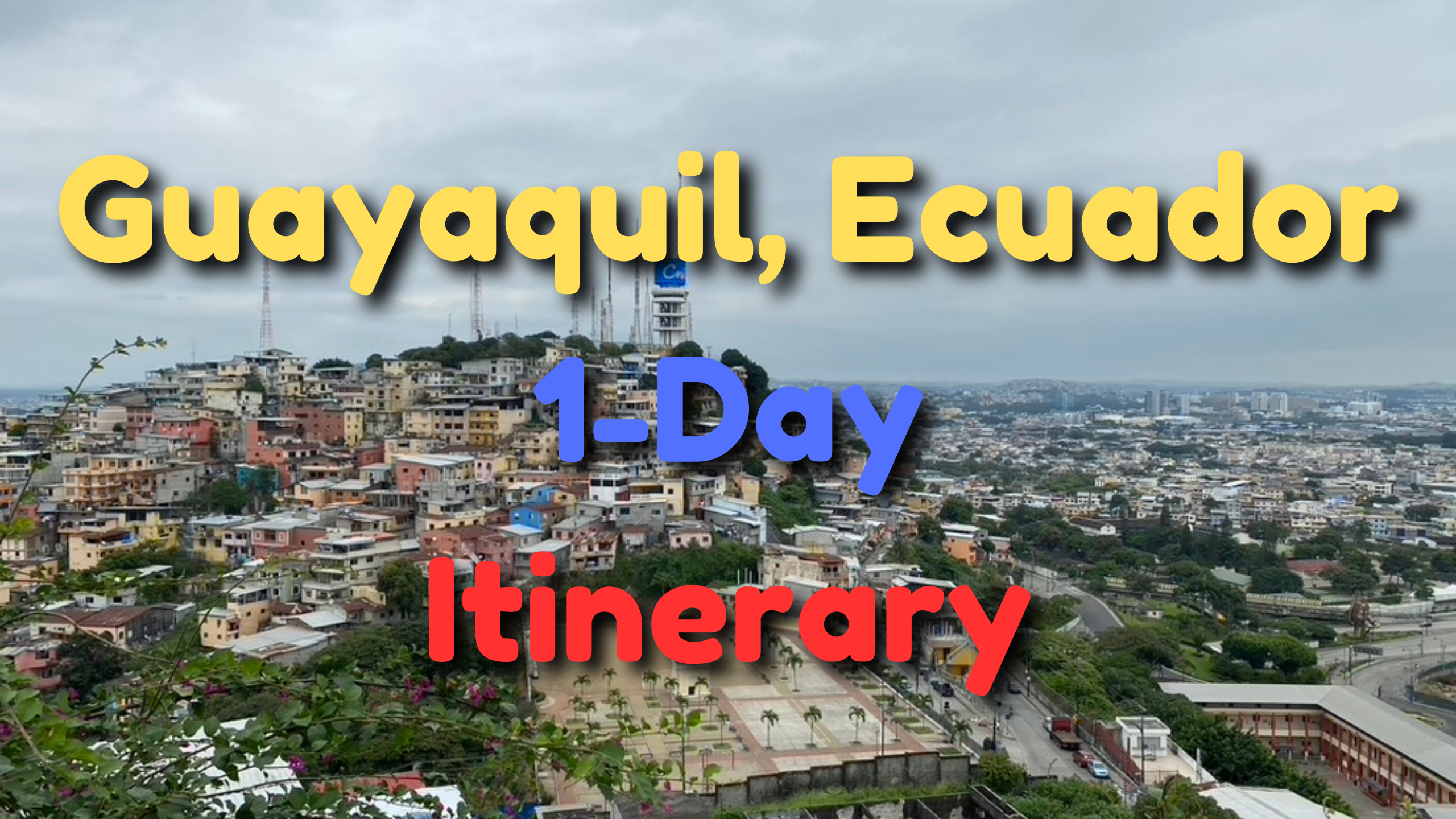
Guayaquil Itinerary Introduction
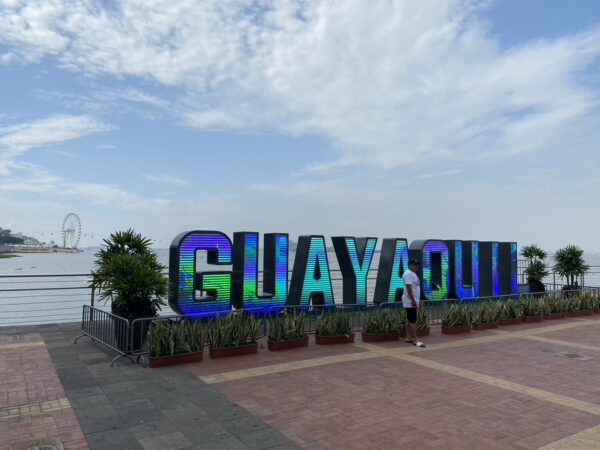
The largest city in Ecuador, the gateway to the Galapagos, and the economic center of the country, Guayaquil is usually overlooked in favor of other cities in Ecuador. Most people just look at this city as a stopover on the way to the Galapagos, or skip it because it’s viewed as unsafe, but there’s actually a lot to see and do in this city if you’re willing to spend the time in it. If you’ve made the decision to devote some time to explore this city, hopefully this 1-Day Guayaquil Itinerary will help you see everything this amazing city has to offer.
When I went to Ecuador, I knew I wanted to explore this city, mostly because of its differences compared to the other two major Ecuadorian cities (Quito and Cuenca). Unlike Quito and Cuenca, Guayaquil is at sea level and is by the coast. This means it has an entirely different climate and vibe and is a slice of Ecuadorian life you can’t get anywhere else.
This 1-Day Guayaquil Itinerary will help you see all the major tourist sites in one day, as well as explore some hidden gems and really soak up the vibe of the city. If you plan on staying in Guayaquil for an extra day or two, there are some day trips you can do from the city that may be worth your time. This Guayaquil itinerary will also give you practical tips for visiting Guayaquil, from when to go to what public transport options are available.
Read My Quito, Ecuador Itinerary
Read My Cuenca, Ecuador Itinerary
By Carter LaCrosse and Stephen Tantoco
Subscribe to my Youtube channel @ Stephen Flores Travel, like me on Facebook at Passport Perspective, and follow me on Instagram / Twitter / Tiktok @StephenJFlores.
This post contains affiliate links. We receive a small commission for purchases made after clicking on these links at no extra cost to you.
Getting There
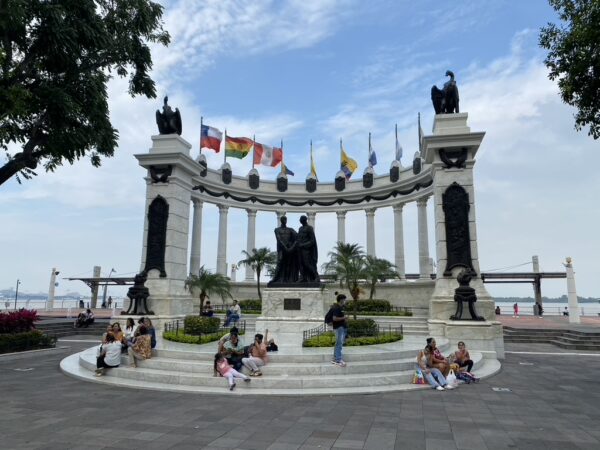
José Joaquín de Olmedo International Airport is the main airport in Guayaquil. It has a plethora of international flights, connecting the city with the likes of Miami, New York, and various other South American and Ecuadorian cities. Guayaquil is known as the gateway to the Galapagos, so you’ll find a lot of flights to the Galapagos from here.
Personally, I would recommend flying to Guayaquil if you’re coming from other Ecuadorian cities. They’re faster than taking the bus and will save you a lot of time and money. Flights domestically in Ecuador are very affordable, so they’re a good option if you don’t want to brave a long bus ride.
If you would rather take the bus or have no choice but to take the bus, there are multiple bus routes that ply the roads from other Ecuadorian cities to Guayaquil. For the most up to date schedules, I would recommend checking out this site. Guayaquil’s bus station is called Terminal Terrestre. It’s located right beside the airport. It takes about 8 hours to get to Guayaquil from Quito by bus.
When to Go, Climate, and Weather
The best time to go to Guayaquil would be during the Dry Season from May to December. Guayaquil, just like other cities in Ecuador, doesn’t have traditional seasons like Western Countries. Instead it has dry and wet seasons, dictated by the rain.
Guayaquil’s climate is different from Quito or Cuenca. It has a tropical climate and is hot and humid for most of the year due to its location by the sea. The average temperature at the warmest month (January) being 31° / 24° with the average temperature of the coldest month being 29° / 21°. The temperature doesn’t fluctuate a lot during the year, so you’ll be deciding when to go based on the rain.
Where to Stay
Guayaquil has a lot of different accommodation options to fit every kind of budget. There isn’t really an area that I would recommend over another as every area has its own selection of accommodation options. Most of the accommodation options are affordable too. Here are the ones I would recommend.
Hostels
Mid-Range
Luxury
Holiday Inn Guayaquil Airport by IHG
Ibis Styles El Malecon Guayaquil
Money Matters
The US Dollar is the official currency of Ecuador. Large parts of Ecuador, including Guayaquil, still use cash. Keep small bills and dollar coins with you at all times, especially if you’re venturing out of the city center. Even $20 bills may not be accepted in certain establishments. Having cash and coins on hand is good practice anywhere you go, but keep it in mind particularly for Ecuador.
Getting Around
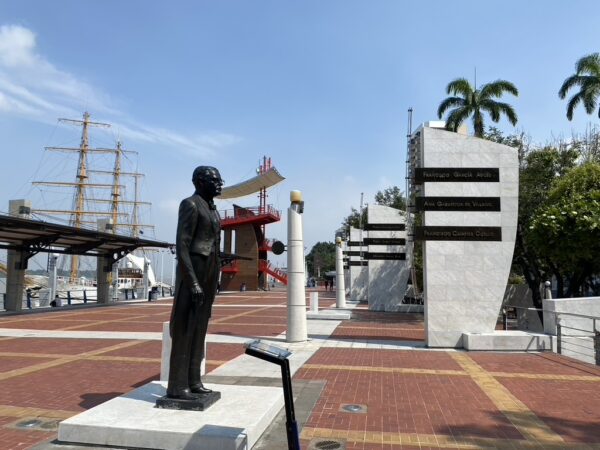
Getting around Guayaquil is relatively easy. There are lots of transportation options that will get you to different parts of the city. It should be noted, however, that some transportation options run close to but not through the city center. If you want to get from place to place in the main area where all the tourist attractions are, your best bets are taking a taxi or walking to your next destination. The city center is extremely walkable so you won’t have a hard time navigating it.
Buses
Buses ply the streets of Guayaquil on many different routes. Called the Metrovia, the bus system of Guayaquil is quite expansive, but as mentioned in the previous section, it does not pass through the city center. They do pass by Malecon Avenue, so if you need to get anywhere from the city center, heading to Malecon Avenue is your best bet. If you must take the bus at night, be aware that petty theft does occur at nighttime.
Taxis
If you’d like to get from one place to another while in the city center, then taxis will be your best bet. Remember to always negotiate the fare before entering the taxi if the meter isn’t on. If you feel unsafe or feel like the driver is trying to rip you off, then just step out of the taxi and find a new one. They do have a tendency to overcharge tourists, so just keep that in mind. Also, for added safety, do not sit in the front seat of the cab.
Uber
Uber is widely available in Guayaquil. It may take a while for a driver to accept your ride request, especially if you’re going long distances, but Uber ensures that you have a set price for your ride before you even get in the vehicle. This was my go-to choice for traveling around the city. It just makes it so easy to book a ride and you don’t have to worry about getting scammed.
Walking
As mentioned, the city center of Guayaquil is very walkable. The Malecon 2000 area in particular is very easy to walk through. That being said, pickpocketing and petty theft does happen even in tourist areas. I would exercise the normal precautions when walking from one place to another, especially at night.
Language
Spanish is the official language of Ecuador. There is a possibility that you will encounter a language barrier even in a huge city like Guayaquil. This Guayaquil itinerary recommends that you know some rudimentary Spanish phrases just in case you need to speak to a local. And remember, a smile goes a long way when interacting with people.
Safety
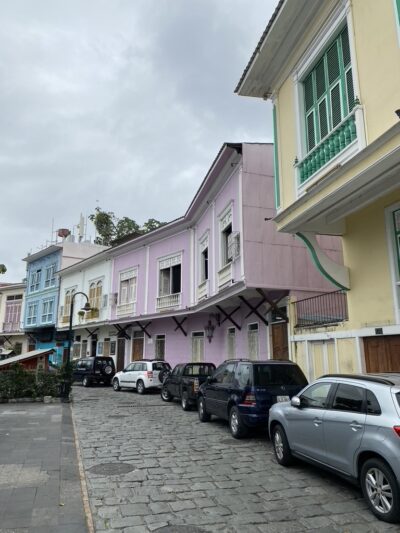
Of the three major cities in Ecuador, I would say that Guayaquil might be the least safe of the three. That’s not to say that you shouldn’t go. It’s probably just as dangerous as other big American cities like New York or Los Angeles. Just keep your wits about you, don’t carry too many valuables, and as mentioned, exercise normal precautions.
Try carrying anti-theft bags to keep cash and valuables in. Also, only carry the amount of cash you think you’re going to need for the day and keep everything else at your hotel. Muggings do happen in Guayaquil, but they don’t really happen to tourists (although that’s not to say that it will never happen. Everything is always a possibility).
Use Uber as much as possible to avoid taxi scams. A lot of scams try to trick tourists into buying fake or overpriced day trips and excursions, and one popular scam involves splashing water on a tourist and then proceeding to pickpocket them while they’re distracted.
All of this may sound scary, but as long as you’re cautious and don’t do anything against your better judgment, you will be fine.
Now that that’s done, let’s go through the main part of this Guayaquil itinerary!
Day 1: Guayaquil Center
Have Breakfast at Mercado de Sauces 9

To start your day, I recommend having breakfast at Mercado de Sauces 9. This is located a little bit far from the city center, so I would recommend catching an Uber to get here. This is the best place in the city, or maybe even the country, to try ceviche. It’s definitely the most local place to try it, and you can also get the famous Bolon de verde, another Ecuadorian dish. Once you’re done eating, take an Uber to the city center. Specifically, to the base of Cerro de Santa Ana, the next stop of this Guayaquil itinerary.
Climb Up the 444 steps to Cerro Santa Ana
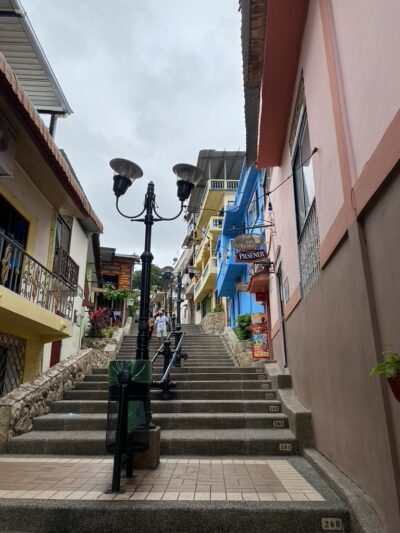
Once you get to the base of the hill, you’ll find yourself in what is probably the most iconic neighborhood of Guayaquil: Las Peñas. Now comes the hard part: walking up the hill. There are 444 steps to get to the top, with various breaks in between if you want to peruse the different plazas located at the rest stops.
Each step is labelled with a number and every so often there will be vendors selling water to keep you hydrated. It’s a long climb but totally worth it in the end. Since it can get hot in Guayaquil, I recommend doing this at the beginning of the day. It’ll also get the blood flowing and prepare you for a full day of exploring.
See El Faro de Guayaquil
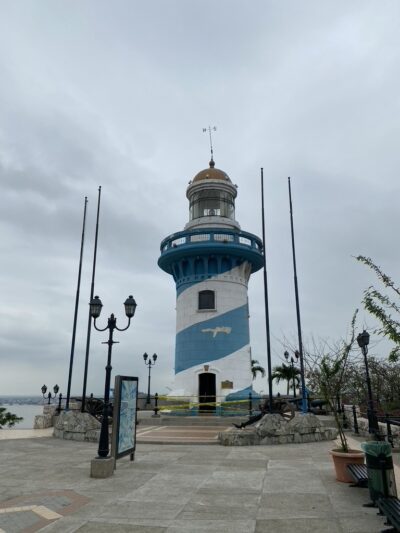
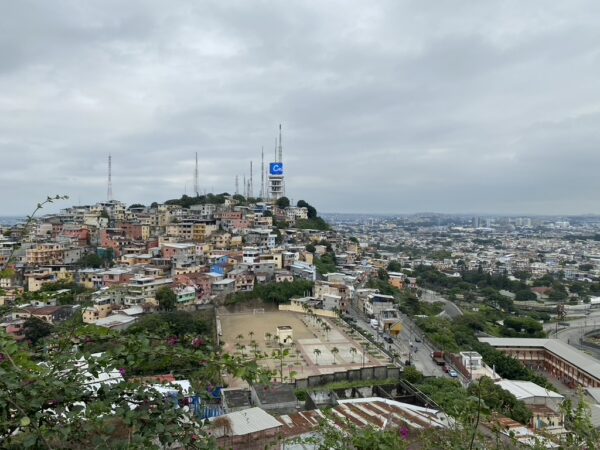
Once you get to the top, take in the sweeping views of Guayaquil and the surrounding areas, including the rivers below. At the summit there is a church that you can visit, as well as a lighthouse called El Faro de Guayaquil. You can go to the top of this lighthouse for free and see 360 degree views of the entire city.
Once you’re done exploring, we’re going to walk down the hill through the Las Peñas neighborhood.
Walk Down Through the Las Peñas Neighborhood
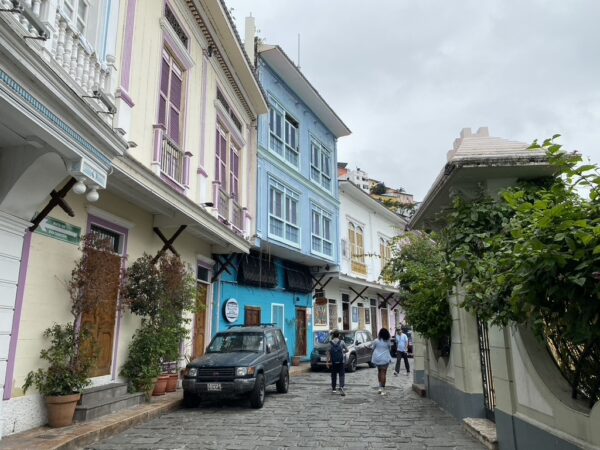
After visiting the summit, walk down via the side streets of the Las Peñas neighborhood to get to the Malecon 2000, which si the next destination of this Guayaquil itinerary. As you’re walking down, be sure to admire the colorful and quaint houses that line the streets of this neighborhood. There’s one street in particular, known as the Numa Pompilio Llona, that is particularly beautiful. Its cobblestone streets and buildings with colonial-inspired architecture that house a variety of shops are sure to catch your eye. Once you get to the bottom, find the Malecon 2000 to continue on with your day.
Walk on the Malecon 2000
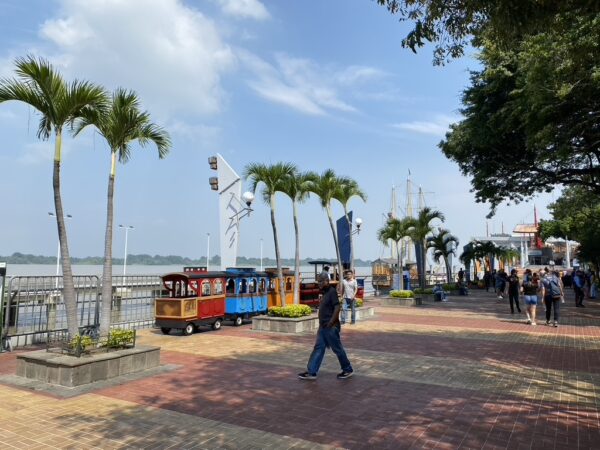
The Malecon 2000, a 2.5km riverside walkway, was opened in the year 2000, hence the name. This is probably the most successful revitalization project in the city. An aging riverfront pier was turned into one of the most lively and attraction-filled parts of the city. For the rest of this Guayaquil itinerary, we will be exploring the attractions located near the Malecon 2000.
Along the Malecon you’ll find restaurants, museums, shopping complexes, and even a ferris wheel! While you’re here, be sure to take in the views of the river and soak up all the atmosphere. But don’t do that for too long! This Guayaquil itinerary is far from over!
Have Lunch at Patio de Comidas or at Las Peñas
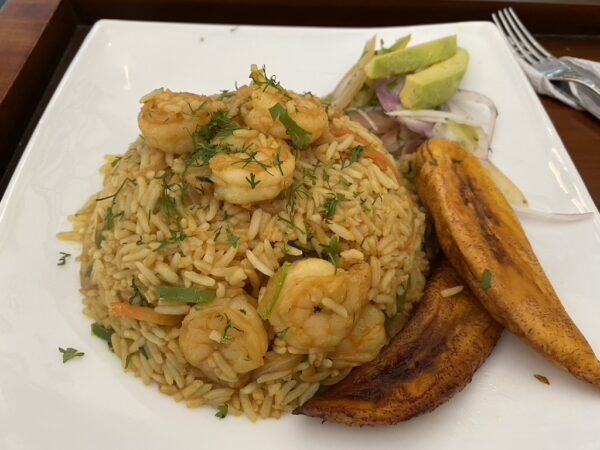
For lunch, we recommend dining at either the Las Peñas neighborhood you were at previously or at the Patio de Comidas, which is located near the Malecon 2000. Many restaurants and food stalls abound in these two places. Depending on when you’re done with Cerro de Santa Ana, you can have lunch either at Las Peñas or at Patio de Comidas. Wherever you choose to have lunch, be sure you’re done by about 1pm.
Visit the Museum of Anthropology and Contemporary Art
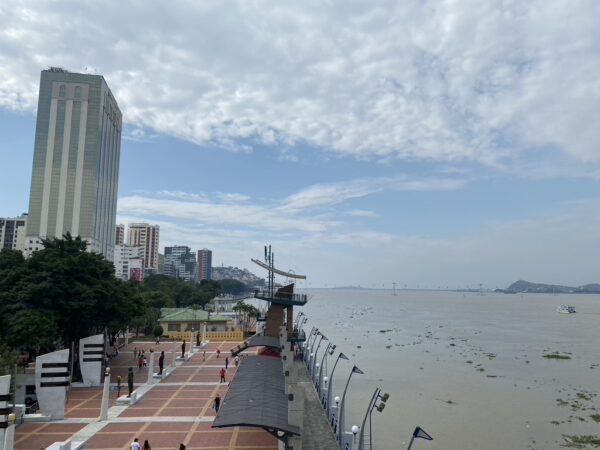
Next up after lunch is a visit to the Museum of Anthropology and Contemporary Art. The museum celebrates the archeological and anthropological history of Ecuador while simultaneously also showcasing hundreds of pieces of modern art. It’s two museums in one, and the best part is it doesn’t usually get that crowded. It opened in 2003, 3 years after the Malecon opened and is today one of its top attractions.
It has six rooms focused on the Anthropology side of the museum, each room highlighting the art and culture of the Ecuadorian people who lived on the coast. Then there are the exhibitions about contemporary Ecuadorian art, as well as art from international artists. It’s an interesting mix of topics, which alone makes it worth exploring.
Admire the Iguanas at Parque Seminario
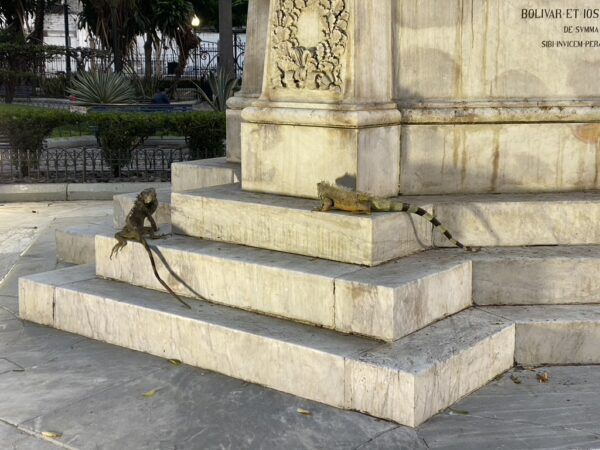
After learning about Ecuadorian history and seeing modern art, head to Parque Seminario via the Malecon 2000. In this park are a ton of Iguanas. They roam the grounds freely and are unafraid of humans due to many people feeding them, sometimes by hand. They are a different species from the iguanas found on the Galapagos islands. This park is also known as Parque Bolivar and Parque de las Iguanas.
Enter the Historic Guayaquil Cathedral
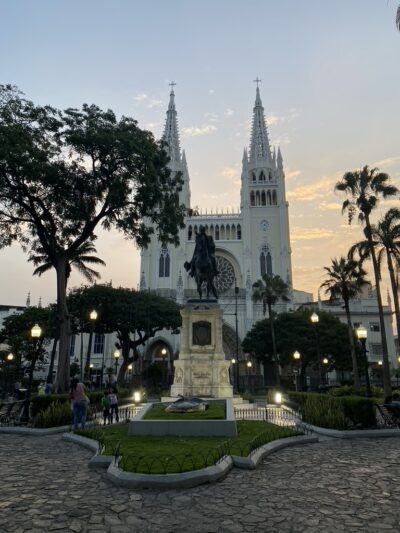
After admiring the iguanas, head to the nearby Guayaquil Cathedral, which is located on one side of Parque Seminario. Built between 1924 and 1937, this is a large church made in the neo-Gothic style. The interior feels very grand, with multiple window-like fixes adorning the walls, as well as tons of stained glass as well. It’s your standard church, but if you like visiting them then I would highly recommend visiting this one since you’re in the area.
Dinner at Mercado Del Rio
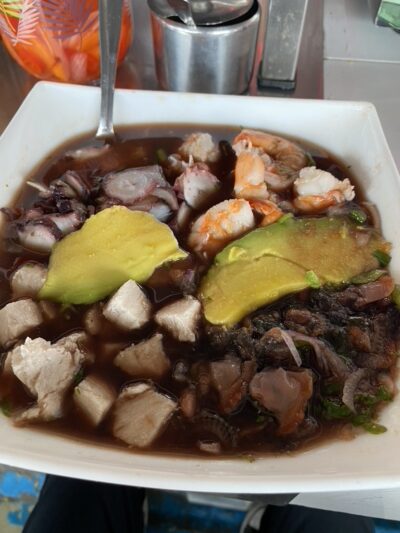
Our last stop of this Guayaquil itinerary is for dinner. Mercado del Rio is located on the Malecon 2000. It has various stalls inside that are worth checking out. It’s not the most local place in Guayaquil, but it contains many different options to try different Ecuadorian dishes.
Other Things to Do In and Around Guayaquil
There are many different day trips you can do from Guayaquil if you have more than one day in the city. This Guayaquil itinerary recommends the following day trips for you to go on if you have the time.
Manglares Churute
This area is known for the various birdlife that call this area home, as well as for being the largest mangrove reserve in Ecuador. Tours usually include a walk through the mangroves. There are two tours that I recommend: this one and this one.
Cerro Blanco Protected Forest
Cerro Blanco is a tropical forest known for its wildlife, including monkeys! It’s about 30 minutes from Guayaquil, and I recommend going there via taxi or uber. Try to go on weekends as much as possible so you can do one of the guided hikes. I recommend joining this tour.
Guayaquil Itinerary Conclusion
And that concludes this Guayaquil itinerary! I hope this was able to help you plan your trip to Guayaquil. If you have any questions, feel free to contact me.
If you found 1-Day Guayaquil Itinerary helpful, consider subscribing to my newsletter to receive inspiration, tips, and insider secrets delivered straight to your inbox. Whether you’re planning your next adventure, daydreaming about far-off places, or seeking hidden gems closer to home, we’ve got you covered.
✨ Here’s What You’ll Get:
- Curated travel guides to iconic and off-the-beaten-path destinations.
- Budget-friendly tips and tips on solo traveling.
- Exclusive deals and must-know travel advice.
- Stories and trip reports to spark your wanderlust and make your trips unforgettable.
Travel smarter, deeper, and with more joy. Join our community of explorers today and never miss a chance to wander! Sign up down below!
SUGGESTED READING:
Leave A Comment